
GenAI Fund Expert Series ft. Qwen: Recap & Key Takeaways
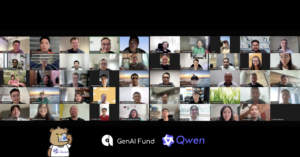
On March 11, we kicked off the GenAI Fund Expert Series with our very first session featuring Qwen by Alibab a Cloud, and the response completely exceeded our expectations.
130+ attendees joined live. That’s 4.5x higher than our initial target. Attendees came from 16 countries, with Malaysia, Singapore, and Vietnam leading the pack. 63% were from startups, 12% from enterprises, and 73% were technical practitioners (developers, IT professionals, and technical founders).
The excitement around open-source AI models in ASEAN is very real.
A huge thank you to David Yam (AI Solutions Architect) and Jason Lin (Global AI Program, Marketing & GTM) from Alibaba Cloud for delivering an incredibly insightful session packed with demos, benchmarks, and real-world use cases.
Here’s a recap of what was covered and what you need to know.
🚀 The China AI Landscape Is Moving Fast
David opened with an overview of the Chinese AI scene, and the pace of development is staggering. What started with DeepSeek’s breakthrough in 2024 has now turned into a full-on wave across the “Five AI Tigers”: Tongyi (Alibaba), Zhipu, Moonshot (Kimi), MiniMax, and others.
The key difference from the West? Chinese AI labs are leaning heavily into an open-weight strategy. While Western models remain mostly closed-source, Chinese labs are releasing model weights, code, and training details openly on platforms like Hugging Face.
A few highlights from the landscape:
- Kimi K 2.5 released a trillion-parameter model that beats Gemini 3 on several benchmarks
- MiniMax released a smaller but competitive open-source model
- GLM5 entered the race with strong results
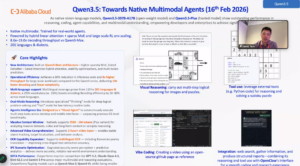
- Qwen 3.5 from Alibaba Cloud is competitive across the board, with particular strengths in agentic tasks
The bottom line: Chinese models are now competitive with Western models on most benchmarks, while being 5x to 17x cheaper on average. For startups and developers watching their burn rate, this changes the math significantly.
🤖 Qwen 3.5 Plus: Built for Agents
The star of the session was Qwen 3.5 Plus, Alibaba Cloud’s latest flagship model. Here’s what makes it stand out:
- 201 languages and dialects supported (roughly 2x the coverage of leading Western models)
- 1 million token context window
- 8x to 19x faster output and decoding compared to previous Qwen models, thanks to the new Qwenix architecture
- Native tool calling and MCP support, purpose-built for agentic workflows
- Visual agent capabilities: can control desktops, browse the web, interact with apps like Excel, and handle coding workflows end to end
- The 27B version retains ~97% of the performance of the full 397B model, making it viable for lighter deployments
David showed live demos of Qwen 3.5 browsing GitHub, writing and testing code, generating promotional videos by pulling content from the web, and even controlling desktop applications to fill in spreadsheets. The model isn’t just answering questions; it’s doing the work.
🎞️ Wan: Video Generation That Keeps Getting Better
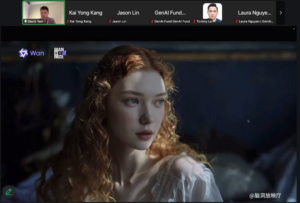
Alibaba Cloud’s video generation model, Wan, also got a spotlight. Currently at version 2.6, with version 2.7 expected within weeks, Wan generates physics-accurate video with complex multi-shot capabilities.
Open-source versions are available up to Wan 2.2, while versions 2.5 and above are accessible via Model Studio API. The pace of iteration here is fast, and switching between versions on Model Studio is as simple as changing an API call.
🖼️ Qwen Image 2.0: From E-Commerce to Real Estate
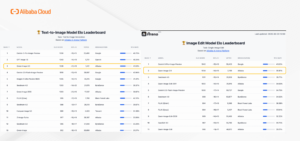
Qwen’s image generation model is currently ranked 2nd or 3rd globally for image generation and editing. Key strengths include:
- Strong text rendering within images (both English and Chinese)
- Multi-image fusion and character consistency across poses
- E-commerce product placement at scale (replacing the need for manual design work)
- Object removal, background fill, and commercial-grade editing
David was transparent about limitations too: the model is not precision-grade for architectural applications that require exact measurements. But for most commercial use cases, it’s more than capable.
⭐ Real-World Use Cases
Two use cases were shared during the session:
Healthcare (Enterprise): TCM Advisor, built by Harish Informatics on Qwen, is deployed across hospitals and clinics in China, Hong Kong, USA, Canada, and Australia. It handles automated patient messaging, clinical records, treatment planning, and telemedicine consultations, all powered by Qwen’s language processing capabilities. This is a strong signal that LLMs can meet the stringent security requirements of healthcare.
AI-Native Video Generation (Startup): A smaller AI-native company demonstrated how they combined Qwen and Wan to build an end-to-end video generation pipeline, connecting to third-party capabilities for a complete content workflow.
What’s Next
This was just the beginning. Here’s what’s coming:
1️⃣ GenAI Builders Meetup (GBM) Special Edition
If you missed the webinar or want to meet the Qwen team in person, we’re running two GBM Special Editions in April:
📍 Kuala Lumpur — April 6 (hosted at Chin Hin Group): https://luma.com/lg29gc89
📍 Singapore — April 8 (hosted at Julius Baer): https://luma.com/rlmczylg
2️⃣ GenAI Fund x Qwen AI Day in Vietnam
We’re also planning a GenAI Fund x Qwen AI Day in Vietnam. Details will be announced soon. This will be an in-person event open to attendees across all regions.
Stay in the Loop
Follow our Luma calendar to get notified about upcoming events, webinars, and meetups 👉: https://luma.com/genaifund
The GenAI Fund Expert Series will continue to bring the most influential players in the global AI ecosystem directly to you. If there’s a topic or team you’d like us to feature next, let us know.
See you at the next one.